
What is a Gas Ballast in a AC/R Vacuum Pump?
Apr 30th 2026
For AC/R technicians, understanding the role of a gas ballast is crucial for effective system evacuation. This article explains what a gas ballast is on an oil-sealed rotary vane vacuum pump and why Appion vacuum pumps are designed without one. To start, let’s answer a few key questions:
What is a gas ballast on an oil-sealed rotary vane vacuum pump, and how does it work?
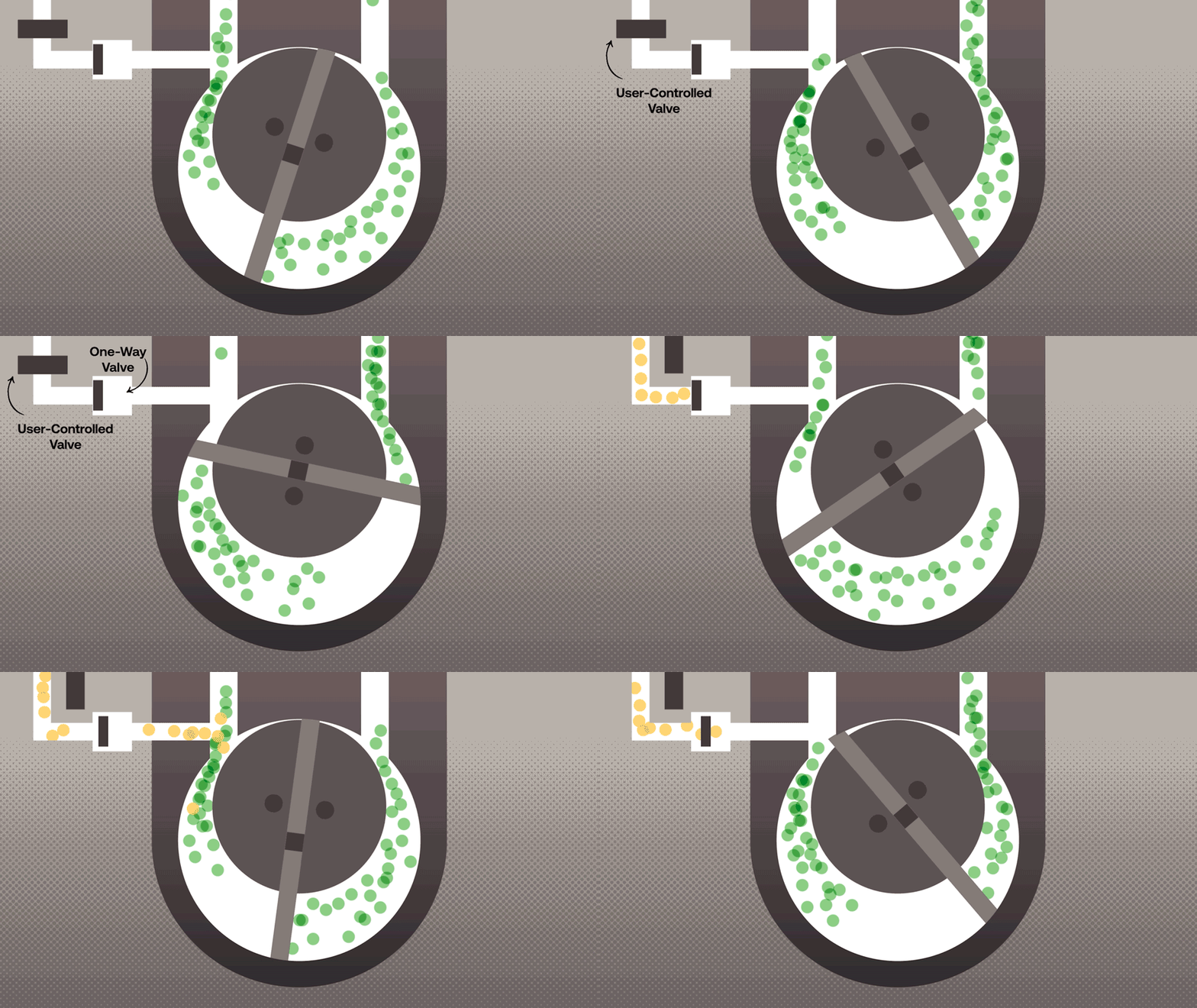
A gas ballast is a valve-controlled mechanism that connects the compression area of the pump mechanism to atmospheric air from outside the pump. The valve mechanism of the gas ballast typically consists of two valves:
-
A user-controlled valve.
-
A one-way valve.
When the user-controlled valve is opened and the compression area of the pump mechanism is below atmospheric pressure, the one-way valve allows atmospheric air to enter the pump mechanism.
Once the compression area is above atmospheric pressure, the one-way valve will close, and the gas and vapor mixture will continue to be compressed until the chamber reaches a pressure high enough to open the pump mechanism's exhaust valve.
Using Gas Ballast Adapters for Flammable Refrigerants
In instances where flammable gases or materials have the potential to pass through the pump mechanism, a gas ballast adapter should be fitted to the pump. A gas ballast adapter allows the user to introduce an inert gas, such as nitrogen or argon, rather than atmospheric air, to prevent an explosive mixture from occurring within the pump mechanism.
How a Gas Ballast Prevents Moisture Condensation
The atmospheric air or inert gas introduced to the compression area by the gas ballast helps prevent vapor (most commonly water vapor) from condensing within the pump mechanism as it is compressed up to atmospheric pressure during the compression cycle. Since most of the vapors are not condensed during the compression cycle, they are easily expelled with the other evacuated gases.
What Happens if the Gas Ballast is Closed?
If the gas ballast is closed while vapors are being evacuated, the vapors will condense within the pump mechanism during the compression cycle. These condensed vapors will embed into the sealing oil of the vacuum pump and stall the evacuation process while the condensed vapors are re-evaporated from the contaminated oil.
Note: An open gas ballast can negatively affect the ultimate vacuum a pump can achieve. However, if used correctly, its effect on the ultimate vacuum is minimal compared to the impact that vapors will have on the pump's performance.
Why Traditional Rotary Vane Pumps Require a Gas Ballast
A gas ballast is essential on an oil-sealed rotary vane pump with a traditional-style oil sump because the oil cannot be changed quickly or during operation.
On pumps with a traditional-style oil sump, the oil surrounds the pump assembly and provides a seal for metal components not sealed with a gasket. This design requires the pump to be turned off to change the oil, further stalling evacuation.

Since the oil cannot be changed quickly, a gas ballast is installed to prevent moisture from being embedded in the oil and to prevent the oil from needing to be changed during the evacuation. This design is acceptable for evacuation outside the AC/R industry, where the moisture and contamination content being removed is minimal.
Why Appion Vacuum Pumps Do Not Have a Gas Ballast
When performing an evacuation on an AC/R system, a technician may encounter many scenarios requiring flexibility, such as:
-
Compressor burnouts.
-
Water and refrigerant circuit cross-contamination.
-
High moisture and contaminant content embedded in compressor oils.
When encountering contaminants in such large quantities, a traditional-style oil sump vacuum pump with a gas ballast is often not enough to keep contaminants out of the oil.
The 5-Second Oil Change Advantage
Appion vacuum pumps, like the TEZ6 and TEZ8, are designed to improve job performance where these scenarios exist regularly by allowing the technician to change the entire oil sump in less than 5 seconds without breaking a vacuum. Changing the oil sump with fresh oil resets the vapor pressure of the oil to less than 1 micron and removes built-up sludge in the oil sump instantly. This aids technicians in their ability to combat the many scenarios they may encounter in AC/R evacuation jobs and keeps the pump working at its maximum capacity for the entirety of the evacuation.

Increased Safety for Flammable Refrigerants
Pumps without a gas ballast are also safer for evacuating systems that contain flammable refrigerants. Because they do not require a gas ballast, they are less likely to introduce air to the compression cycle of the vacuum pump, which could create a combustible gas mixture.
The Bottom Line: The Appion 5-second oil change system makes it faster and easier to swap out contaminated oil than to run a lengthy gas ballast cycle, negating the need for a gas ballast entirely.